Why IL26-638 Is Bigger Than Sports for Washington Students
 NAACP - AOWSAC
Vote NO on IL26-638 is about more than who plays on which team. On November 3, 2026, Washington voters will decide a measure that reaches into every middle and high school locker room in the state, and the young people with the most to lose are the ones who can least afford to lose a team, a coach, or a place to belong.
- On the ballot: Washington only, November 3, 2026 general election
- Brought by: Let’s Go Washington, the signature group led by Brian Heywood
- What it does: Bars students defined as biologically male from girls’ school teams and requires every girl who plays to submit a health care provider’s sex-verification statement
- Who it reaches: An estimated 200,000 Washington girls in grades 6 through 12
- NAACP AOWSAC position: Vote NO on IL26-638
What IL26-638 Would Actually Do
IL26-638 was put on the ballot by Let’s Go Washington, the signature group led by Brian Heywood, after the Legislature declined to act on it this spring. It would bar students the measure defines as biologically male from girls’ school teams. To enforce that, any girl who wants to play would need a health care provider to sign a statement verifying her sex based on reproductive anatomy, genetic makeup, or testosterone levels. Boys face no such requirement.
The League of Women Voters of Washington estimates that roughly 200,000 Washington girls in grades 6 through 12 play school sports. Every one of them would carry this new burden. Opponents of the measure estimate that about 150,000 school-age girls in the state do not have a regular family doctor who knows their history, which means many would face an exam from a stranger just to join a team.
Those girls are not evenly spread. As the League points out, families without a steady doctor are more likely to be low-income, rural, immigrant, Black, and Brown. A rule sold as fairness would land hardest on the girls who already have the fewest open doors.
Why Vote NO on IL26-638 Is Bigger Than Sports
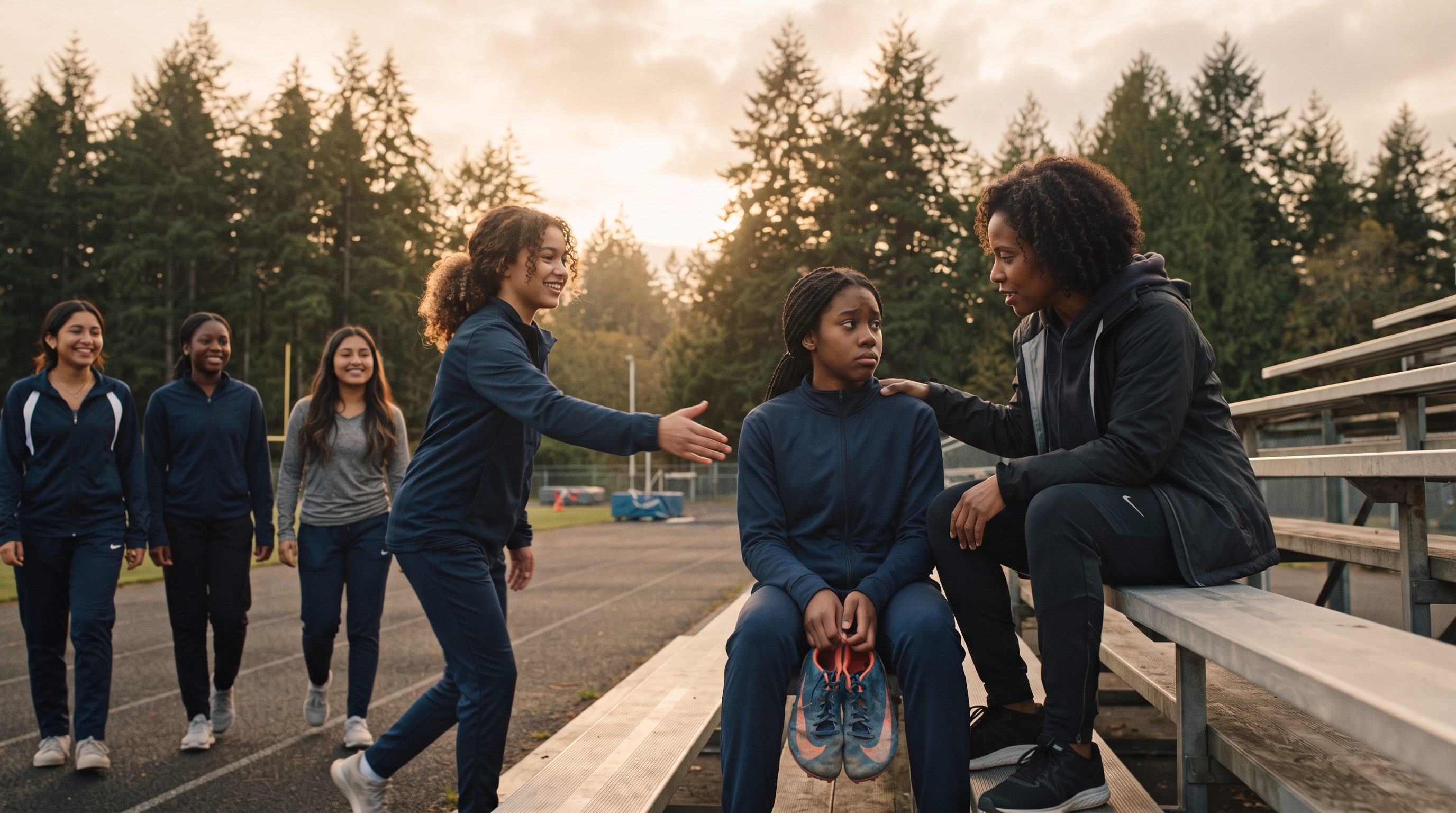
For many young people, school is the steadiest place in their week. A practice schedule, a coach who notices when something is wrong, teammates who expect you to show up. Those things hold kids together, and for some students they are the only consistent adult attention they get.
That is especially true for Black queer and transgender youth. Research from The Trevor Project found that 28 percent of LGBTQ young people have experienced homelessness or housing instability, including about one in four Black LGBTQ youth. Those who had lost stable housing had two to four times the odds of depression, anxiety, and considering suicide. When home is not safe, school can become the anchor.
To be clear, IL26-638 concerns K-12 interscholastic athletics. Housing, family acceptance, and mental health are not provisions of the initiative. They are the context that every voter should hold in mind, because a policy that pushes a child off a team can also push that child away from the adults and friendships that keep them steady. As NAACP AOWSAC says in its own campaign materials, this conversation does not have to be rooted in hate. We can disagree about policy while still protecting the humanity and dignity of every young person involved.
The NAACP has been plain about where it stands. A 2025 NAACP resolution opposes laws and policies that deny transgender and nonbinary students access to education, health care, or safety, and it names sports bans directly. It also recognizes that Black and Brown transgender youth already face more bullying, harassment, and discipline in school.
Vote NO on IL26-638 and What It Means for Washington Families
NAACP AOWSAC represents branches across Alaska, Oregon, and Washington, but only Washington residents vote on IL26-638. That makes Washington members the front line. A broad coalition already stands with them, including the Washington State PTA, the Washington Education Association, State Superintendent Chris Reykdal, and the ACLU of Washington.
The questions in front of voters are simple ones. Where does this young person belong? Who knows their name? Who supports them? Our children deserve places where they can experience safety, connection, dignity, and belonging.
A ballot box is not where any girl should have to prove she deserves a spot on the team.
Read the full case, see how IL26-638 sits alongside IL26-001, and add your name to the pledge on our Vote NO on IL26-001 and IL26-638 campaign page, including the section on Black queer youth, belonging, and school. If you live in Alaska or Oregon, share this with the Washington families in your life.
Take the pledge, then make your plan to return your ballot by November 3.
Frequently Asked Questions About Vote NO on IL26-638
1. What is IL26-638?
IL26-638 is a Washington initiative on the November 3, 2026 ballot. It would bar students defined as biologically male from girls’ school sports and require every girl who wants to play to get a health care provider’s statement verifying her sex.
2. Does IL26-638 affect girls who are not transgender?
Yes. The verification requirement applies to every girl on a girls’ team, an estimated 200,000 students in grades 6 through 12. Boys do not face the same requirement.
3. Why is the NAACP asking people to vote NO on IL26-638?
The NAACP urges a Vote NO on IL26-638 because the measure places the heaviest burden on girls without a regular doctor, who are more likely to be low-income, rural, Black, and Brown, and it targets transgender students the NAACP has formally pledged to protect. School teams are also a lifeline of belonging for many vulnerable young people.
4. Can Alaska and Oregon members vote on IL26-638?
No. IL26-638 is on the Washington ballot only. Members in Alaska and Oregon can still help by sharing accurate information with friends and family in Washington.
5. How do I vote on IL26-638?
Washington votes by mail. Check your registration and find a drop box at VoteWA.gov. Return your ballot to a drop box by 8 p.m. on November 3, 2026, or make sure it is postmarked by Election Day.