History Made in Seattle: Deaunte Damper Becomes First Black Seattle-Born Grand Marshal of Seattle Pride 2026
-
by
NAACP - AOWSAC
- No Comments on History Made in Seattle: Deaunte Damper Becomes First Black Seattle-Born Grand Marshal of Seattle Pride 2026
Quick Look
- What happened: Deaunte Damper became the first Black man born and raised in Seattle to serve as Grand Marshal of the Seattle Pride Parade.
- Who else is honored: Dwone Anderson-Young (1990-2014), remembered by his mother marching in the crowd, and Hiram, honored by his brother and the organization his memory inspired, We Live in Color.
- The moment that mattered most: Damper’s keynote speech reclaimed the historical legacy of Bayard Rustin, the openly gay civil rights strategist who organized the 1963 March on Washington and was given only 20 seconds to speak because of his sexuality.
- The message: “This is more than just a moment. This is a movement. Don’t bypass us. Prioritize us.”
- Credit: Video produced by Converge Media.
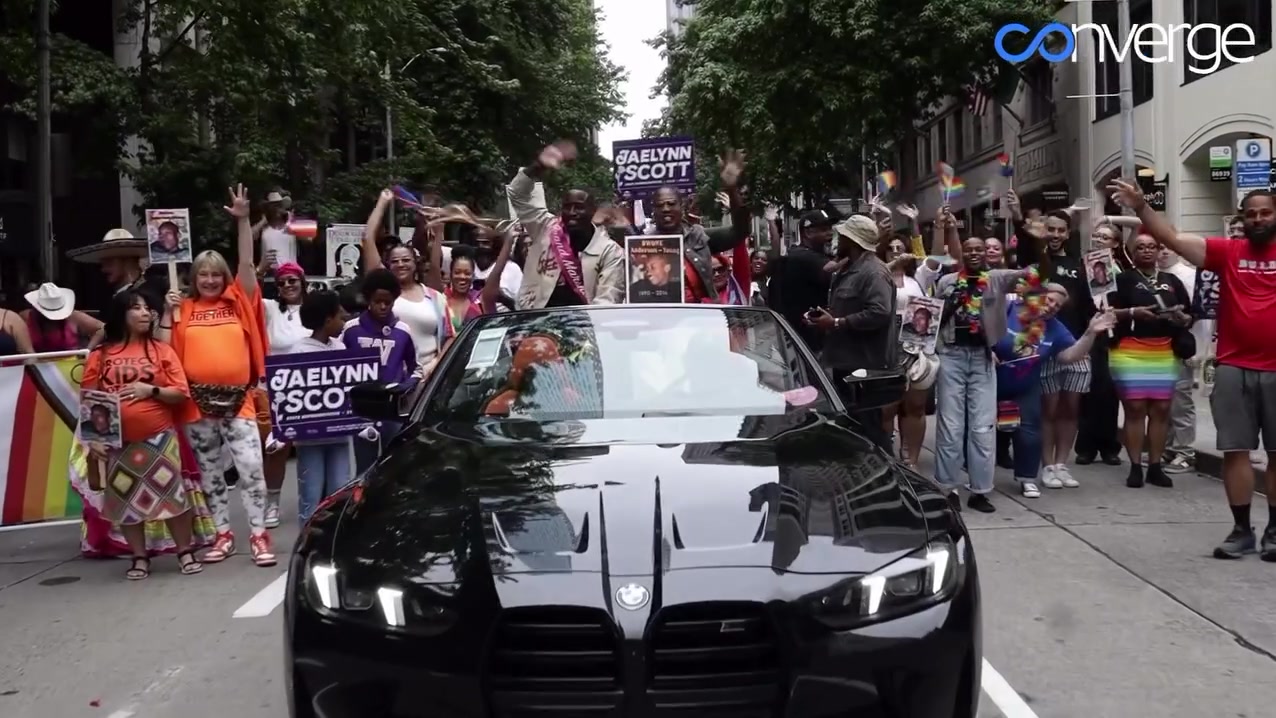
History was not just made on Sunday in Seattle. It was felt in every heartbeat, every shout, and every tear on the streets of the city. Deaunte Damper, riding in a black BMW convertible down the parade route, became the first Black man born and raised in Seattle to serve as Grand Marshal of the Seattle Pride Parade. He wore the honor the way he has carried his community for years: boldly, visibly, and without apology. A pink “Grand Marshal” sash crossed a custom beige jacket painted with red handprints on the front, and across the back, in bold graffiti-style lettering, seven words that would become the day’s rallying cry: “They want our rhythm but not our blues.”
Deaunte Damper makes history as Grand Marshal of the 2026 Seattle Pride Parade. Produced by Converge Media. Presented by NAACP Alaska Oregon Washington State Area Conference.
A Parade That Looked Like Joy and Refused to Forget
Downtown Seattle overflowed with color. Progress Pride flags and Transgender Pride flags waved above a crowd that danced, blew bubbles, and cheered as Damper’s convertible rolled past. Signs lifted up local champions like State Representative Jaelynn Scott. It looked, for every passing block, like pure celebration. But scattered through that joy were two people carrying something heavier, and it is their presence that gave the day its true weight.
Twelve Years Later, Someone Still Remembered His Name
Standing along the route was the mother of Dwone Anderson-Young, holding a memorial sign bearing her son’s name and the years of his life: 1990 to 2014. Dwone was murdered on June 1, 2014, the victim of a hate crime in Seattle’s Central District, as reported by The Seattle Times. For twelve years, his mother has carried that loss. On Sunday, she marched, invited personally by Deaunte Damper, and stood as living proof that her son’s story has not been forgotten.
“Love is love, and we just need to do better.”
There is no small gesture in being remembered by name, twelve years on, in front of a cheering crowd on a street that once held so much danger for people like her son. That Damper made space for her grief inside a celebration says everything about the kind of leader Seattle just chose to represent it.
The Legacy That Built a Movement
Also in the crowd was a man in a white T-shirt reading “Ask Me About: Hiram,” printed beside a portrait of a young Black man. He is Hiram’s brother, and he came to honor a life that ended in 2005. Hiram lived openly and courageously as a gay Black man through the 1980s, a decade when people traveled to Seattle specifically to attack gay individuals simply for existing in public. His courage did not disappear when he did. It became the seed for We Live in Color, an initiative built directly from Hiram’s legacy to give Black queer people a voice and a dedicated space of their own.
A parade is a single afternoon. A legacy like Hiram’s outlives the people who carry it forward, and on Sunday, it was carried forward loudly.
Reclaiming Bayard Rustin’s Stolen Twenty Seconds
The parade’s most powerful moment came when Damper took a microphone at a major downtown intersection to deliver his keynote. He reached back to 1963, to the March on Washington, and to a man history nearly erased from the story he built: Bayard Rustin, the openly gay civil rights strategist who was the primary organizer of that march. Damper recited Rustin’s own words, spoken more than sixty years ago:
“Our first demand is that we want effective civil rights. No compromise, no filibuster! That includes decent housing, integrated education, and the right to vote!”
Then Damper told the crowd something many did not know. Despite organizing the entire March on Washington, Rustin was permitted to speak for only twenty seconds, silenced by the same movement he built, because of his sexuality. Standing on that Seattle street corner in 2026, Damper declared that the Black LGBTQIA+ community was reclaiming that stolen time, one speech, one parade, one Grand Marshal sash at a time.
This Is Not Performance. This Is a Movement.
Damper closed his speech the way his jacket opened the conversation, pointing directly at the gap between being celebrated and being supported:
“This is more than just a moment. This is a movement. Don’t bypass us. Prioritize us.”
You want our rhythm, Damper told the crowd, but you don’t want our blues. It is a line sharp enough to sting and true enough to sit with long after the parade ends. It names something many Black queer leaders have felt for decades: applause without investment, visibility without protection, celebration in June and silence the other eleven months.
Produced by Converge Media
A massive and heartfelt thank you to Seattle Pride for this historic occasion and for amplifying the homegrown voices that lead, organize, and heal Seattle every single day. Immense gratitude to the incredible Converge Media crew who worked tirelessly to capture the raw, beautiful essence of this day: Alaia D’Alessandro, Erik Kalligraphy, ProofNThePlay, Emilio Dominguez, and Mead Gill. Thank you for ensuring our stories are told with the dignity, color, and power they deserve.
NAACP AOWSAC Stands in Solidarity
The NAACP Alaska Oregon Washington State Area Conference congratulates Deaunte Damper on this well-deserved, history-making honor. Black LGBTQ+ leadership is NAACP leadership. The fight for civil rights has never been separate from the fight for LGBTQ+ equality, and Sunday proved it in the clearest terms possible: in a mother’s memorial sign, in a brother’s tribute shirt, and in a Grand Marshal’s demand that his community stop being celebrated in theory and start being protected in practice.
Congratulations, Deaunte. Seattle is better because you were born and raised here, and prouder still because you never once let it forget who built it.
To learn more about our advocacy work across the Pacific Northwest, visit our Our Mission page or explore our upcoming events.
Moments Like This Are Why We Fight
Deaunte Damper’s story is a reminder of what is possible when a community refuses to be sidelined. If his message moved you, don’t just watch history. Help make it. Join the NAACP and stand with us as we fight for Black lives, Black dignity, and Black LGBTQ+ visibility across Alaska, Oregon, and Washington.
Frequently Asked Questions
1. Who is Deaunte Damper?
Deaunte Damper is a lifelong Seattle resident, a Rainier Beach High School graduate, and one of the city’s most visible advocates at the intersection of Black identity, LGBTQ rights, and public health. He began his advocacy work with People of Color Against AIDS Network (POCAAN), helping community members navigate health disparities, housing, and reentry after incarceration. In 2019, he made history as the first-ever LGBTQ Chair in the NAACP’s history. He also founded B.R.O.T.H.A., a support group for Black men navigating trauma and health inequities, hosts We Live in Color on Converge Media, serves as incoming board chair of Black Lives Matter Seattle-King County, and works as a Community Engagement Specialist for King County Public Health’s Regional Office of Gun Violence Prevention. In 2026, Seattle Pride named him a Grand Marshal, calling him a reflection of years of work at the intersection of Black identity, public health, and LGBTQ advocacy.
2. Who was Dwone Anderson-Young?
Dwone Anderson-Young (1990-2014) was murdered in a hate crime in Seattle’s Central District. His mother marched in the 2026 parade, invited by Deaunte Damper, carrying a memorial sign in his honor.
3. What is We Live in Color?
We Live in Color is an initiative built from the legacy of Hiram, a Black gay man who lived openly in Seattle through the dangerous 1980s and passed away in 2005. It gives Black queer people a voice and a dedicated community space.
4. Why did Damper mention Bayard Rustin in his speech?
Bayard Rustin organized the 1963 March on Washington but was allowed to speak for only 20 seconds because he was gay. Damper recited Rustin’s words to show the Black LGBTQIA+ community reclaiming the recognition and time history denied him.
5. Who produced the video of the parade?
The video was produced by the Converge Media crew, featuring the work of Alaia D’Alessandro, Erik Kalligraphy, ProofNThePlay, Emilio Dominguez, and Mead Gill.